Ride a few times a month? Here's what that bike really costs to keep going
A nine-year-old hybrid on the repair stand, itemized: which parts wear out on light use, which wear out on the calendar, and what the price tier actually buys you.
Also here
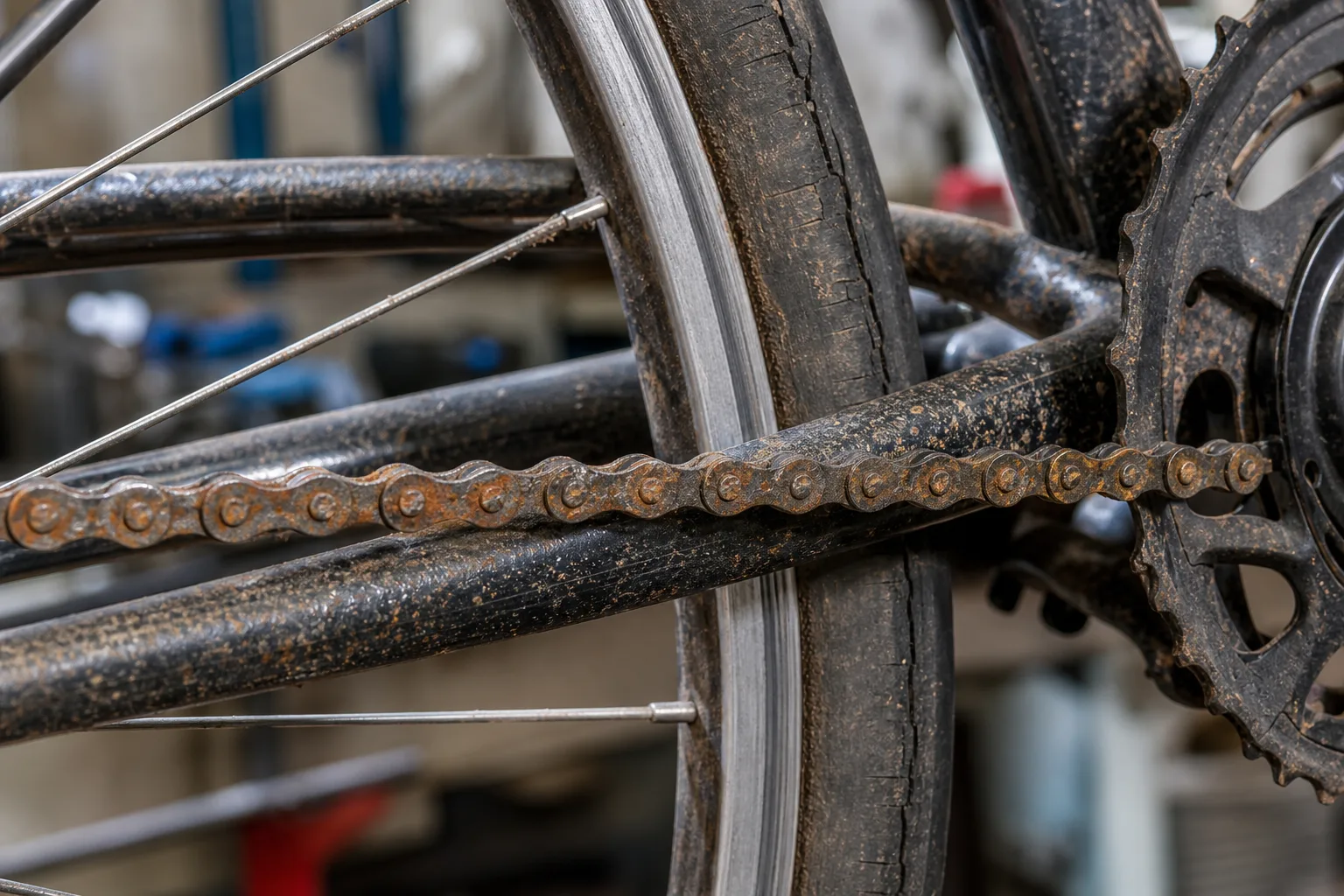
A chain checker tool reads wear directly and costs about as much as a single cable replacement. Replacing at the wear mark keeps the cassette and chainrings out of the repair bill.
A hybrid came into a shop last spring with a story its owner thought was simple: it had been ridden maybe twenty times a year since 2016, mostly on a paved rail trail, and it now made a grinding noise on hills. The mechanic put it on the stand and found a chain worn past the point where a new one would sit properly on the cassette, tires with sidewalls that had gone gray and slightly crazed, brake cables that dragged in their housing, and a rear derailleur that shifted fine once the cable was replaced. Total labor was modest. Total parts were not, because three separate things had aged out at once.
1. The chain, which wears by miles but rusts by months
A chain is the cheapest wear part on the bike and the one that decides how expensive everything else gets. Ridden lightly and stored dry, a chain can outlast several seasons, but a chain left damp in a garage will develop stiff links and surface rust long before it is mechanically worn. What a careful reader checks is not the mileage but the stretch: a chain checker tool, the kind that drops into the links and reads a number, costs about what a single cable replacement costs and pays for itself the first time it saves a cassette. Replace at the indicated wear point and the rest of the drivetrain lasts years.
2. Tires that die on the calendar, not the odometer
Casual riders almost never wear the tread off a hybrid tire. What they get instead is rubber that hardens, cracks at the sidewall flex point, and starts picking up glass it would once have shed. Squeeze the sidewall of a tire that has sat five summers in a hot garage and you can feel the difference against a new one. Tires are the single largest recurring parts cost on a comfort bike, more than chains and pads combined over a decade, and they are also the part that most changes how the bike rides. Replacing both at once, with the tubes, is the sensible interval.
3. Brake pads, and the difference between rim and disc
Rim pads are inexpensive, visible without tools, and easy to judge: look for the wear grooves molded into the rubber, and look at the braking surface of the rim itself, which is also a wear part and eventually develops a concave dish. Disc pads cost more, hide behind the caliper, and require pulling the wheel or peering in with a light to read what is left. Light riders often go several years on one set of either. Contaminated pads, the ones that squeal after a chain lube overspray, are the more common reason for replacement, and new pads solve it outright.
4. Cables and housing, the quiet tax on a stored bike
Shift and brake cables corrode inside their housing whether you ride or not, and the symptom is a bike that shifts lazily and brakes with a vague, spongy pull. A full cable and housing replacement, front and rear, both systems, is a shop job of an hour or two and transforms a bike that felt tired into one that feels new. On a bike ridden a few times a month, plan on this roughly every four to six years, sooner if it lives outdoors. It is the best value repair on the list.
5. What the price tier actually buys
Between an entry-level department store bike and a shop bike at roughly twice the price, the changes are wheels that stay true, sealed bearings that survive rain, aluminum rims with a real braking surface, and shifters that keep indexing after a few hundred miles. The Consumer Product Safety Commission sets the federal requirements bicycles must meet before sale, so the floor is a safety floor, not a durability floor. Going up another tier buys hydraulic disc brakes, better tires as original equipment, and a frame with mounts for racks and fenders. Past that, the money goes to weight, which a casual rider on flat ground will not notice.
6. The tune-up interval for light use
One tune-up a year, scheduled in early spring before the shop queue builds, covers a bike ridden a few times a month. Ask the shop to quote the tune-up separately from parts, and ask which parts they expect to replace before they start.